Wat Jed Yod, Chiang Mai: History, Hours & What to See (2026)
Wat Jed Yod (Wat Chet Yot, officially Wat Photharam Maha Wihan) is a 15th-century royal temple in north-west Chiang Mai, built by King Tilokarat of Lanna from 1455 and famous for its seven-spired vihara modelled on the Mahabodhi temple. It is free to enter, open daily from about 6:00 to 18:00 (checked Nov 2026), and you need 45 minutes to an hour and a half. It sits just off the Superhighway, a few hundred metres from the Chiang Mai National Museum, and sees a fraction of the crowds of the Old City temples.
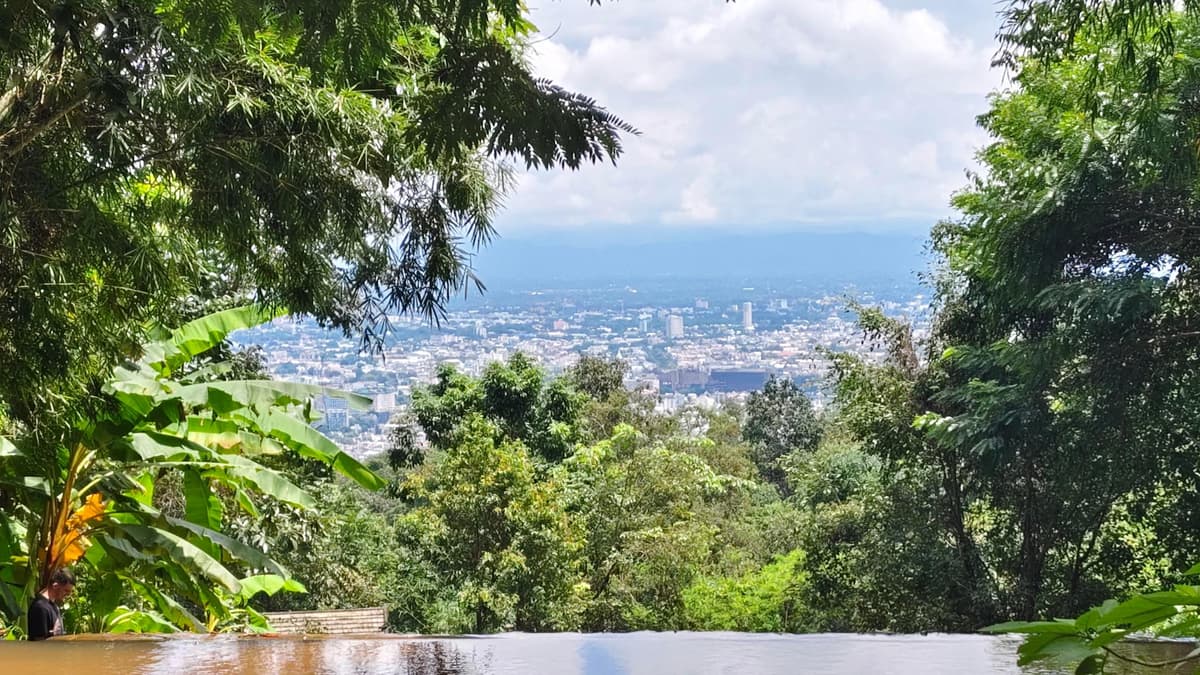
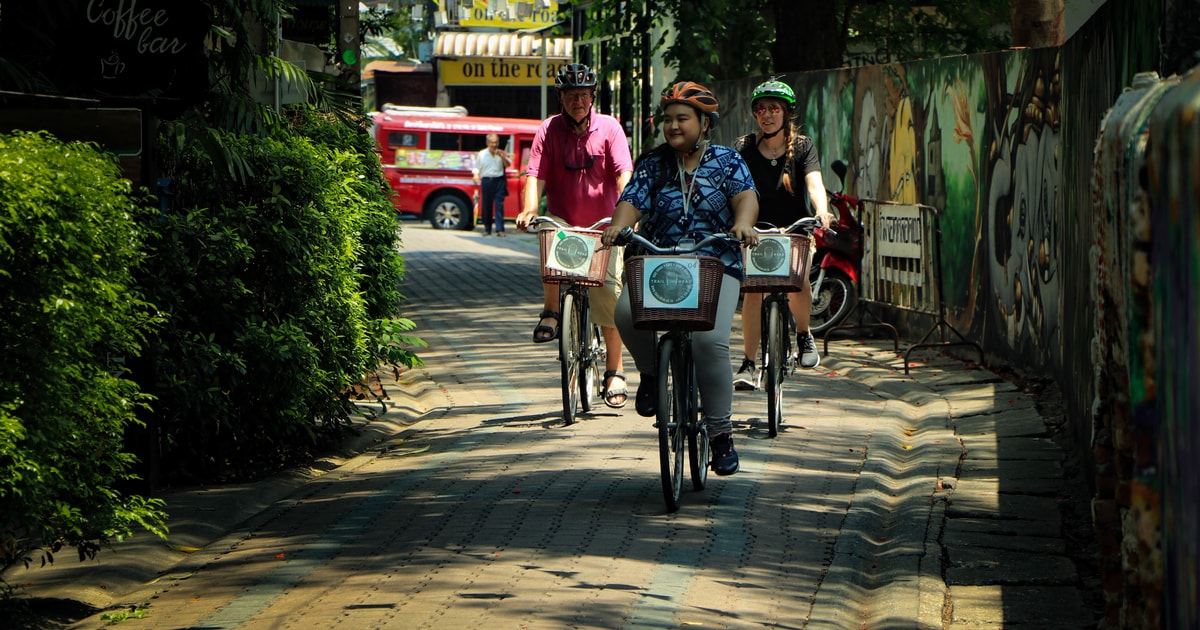
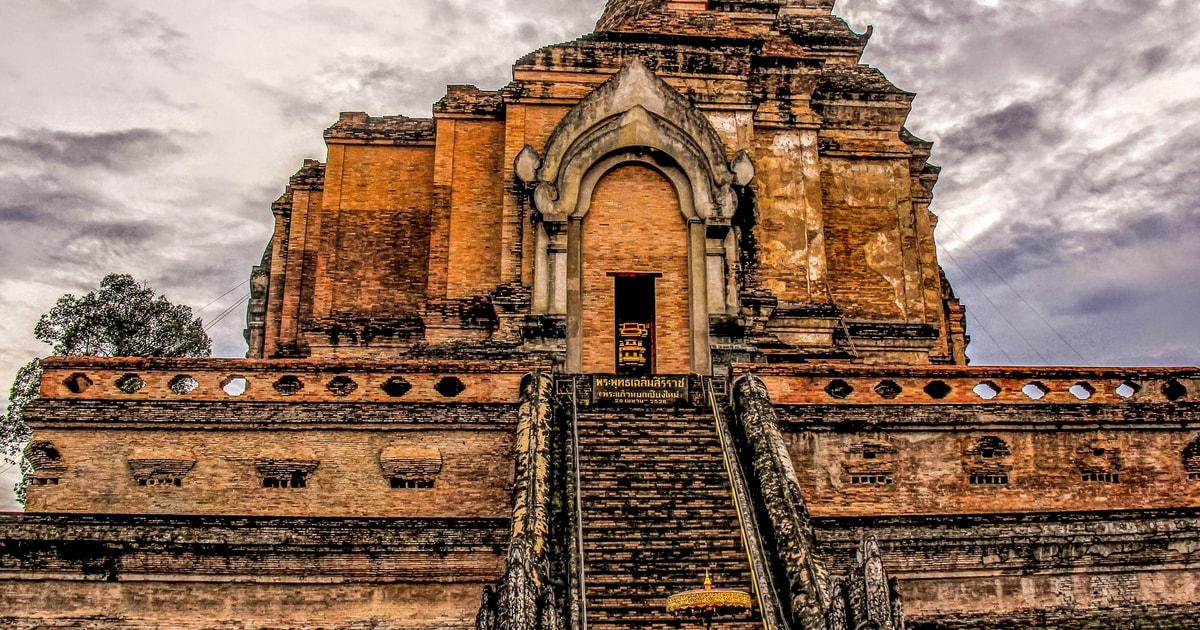
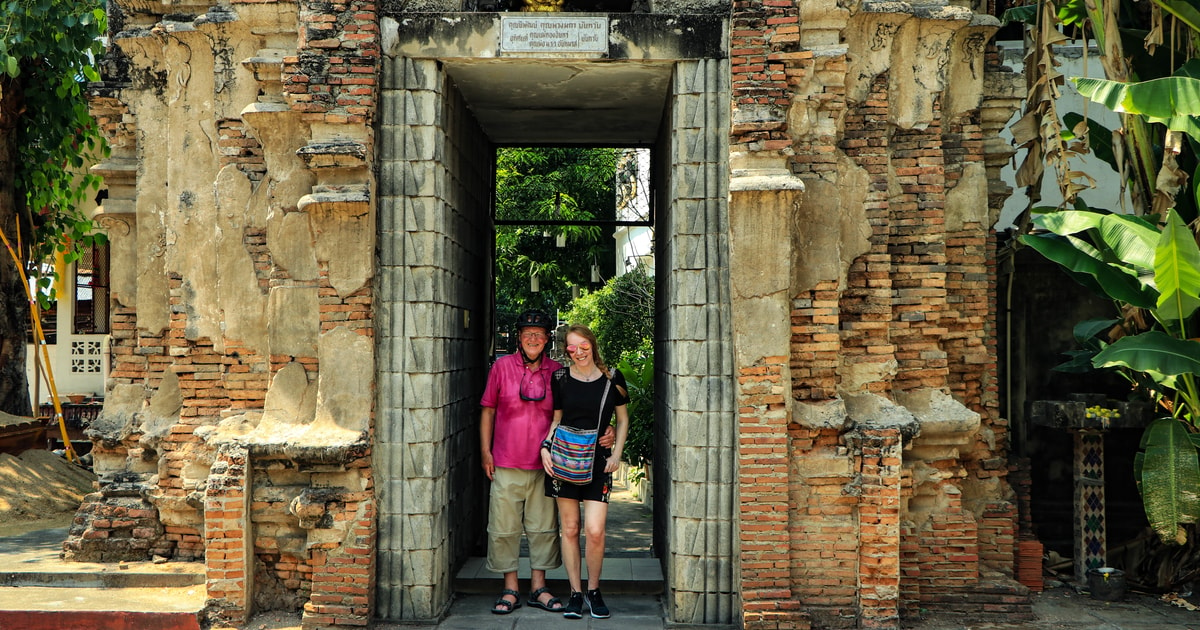
There is no guided tour dedicated to Wat Jed Yod, and you don’t need one: a Grab, a red songthaew or a bicycle gets you there in 10–20 minutes from the Old City. This guide covers the history, what to look for, practical details and how to fit it into a day with Wat Umong, Wat Suan Dok or Doi Suthep. The photos on this page are from GetYourGuide tours around Chiang Mai – the captions say what they show.
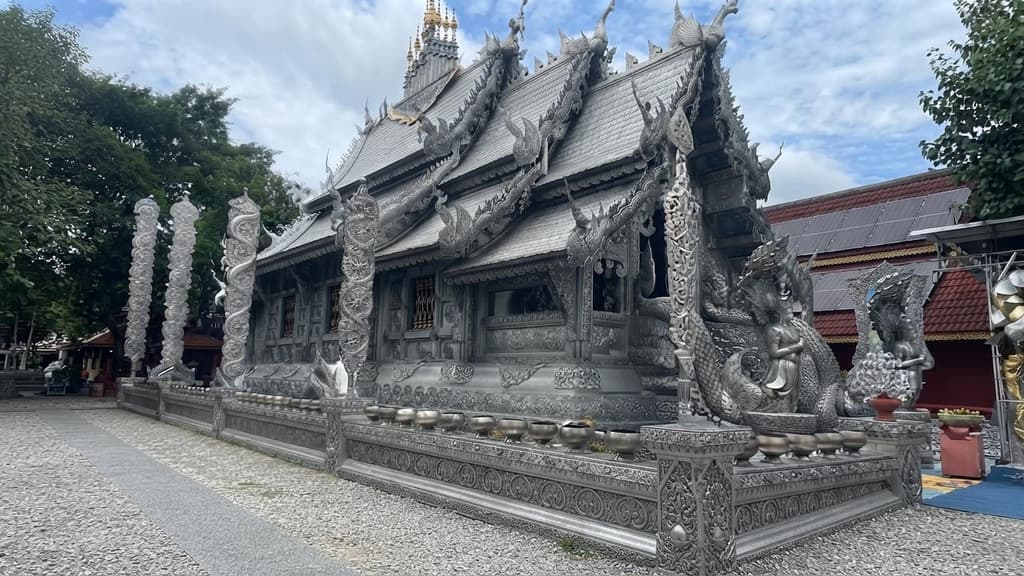
Wat Jed Yod at a glance
| What | Details (checked 12 Nov 2026) |
|---|---|
| Names | Wat Jed Yod, Wat Chet Yot, Wat Photharam Maha Wihan |
| Built | From 1455, under King Tilokarat (reigned 1441–1487) |
| Famous for | Seven-spired vihara, 70 stucco deities, 1477 Buddhist council |
| Hours | Daily, about 6:00–18:00 |
| Entry | Free; donations welcome |
| Dress | Shoulders and knees covered; shoes off inside |
| Time needed | 45 minutes to 1.5 hours |
| Location | North side of the Superhighway (Route 11), near the National Museum |
History: King Tilokarat and the 1477 Buddhist council
Wat Jed Yod belongs to the golden age of the Lanna kingdom. Its founder, King Tilokarat (also spelt Tilokkarat), ruled Lanna from 1441 to 1487 and was one of its most powerful and devout kings. According to the temple’s traditional history, he sent monks to Bagan in Burma to study the Mahabodhi temple there – itself a copy of the great Mahabodhi temple at Bodh Gaya in India, where the Buddha attained enlightenment. In 1455 he founded a monastery on this spot and planted a bodhi tree, a symbolic link to the tree of the enlightenment. That is where the official name comes from: Photharam means roughly “the monastery of the bodhi tree”.
The Jinakalamali, a Pali chronicle written in Chiang Mai in the early 16th century, records that the king had a large sanctuary built here around 1476–1477. In 1477 Wat Jed Yod hosted what Thai tradition counts as the Eighth World Buddhist Council. Learned monks gathered to review and correct the Tripitaka, the Pali scriptures – a major event that put Chiang Mai at the centre of Theravada Buddhism in the region.
When Tilokarat died in 1487, his successor built a large chedi in the grounds to hold his ashes. It still stands, and is one of the reasons many Thai visitors come here: Wat Jed Yod is a royal temple, a place of pilgrimage, and in Lanna tradition one of the temples associated with people born in the Year of the Snake.
After the Burmese took Chiang Mai in the 16th century the temple declined, and for long periods it was partly ruined. A bodhi tree that had taken root on the roof of the vihara was removed in 1910 to stop the structure collapsing. Today it is again an active monastery, with monks living and studying on the grounds.

The seven-spired vihara
The name Jed Yod – “seven peaks” – refers to the main building, which looks nothing like the steep-roofed wooden halls you see in the Old City. It is a solid, square block of laterite and brick topped by seven spires: one large central chedi surrounded by smaller ones at the corners and sides. The shape is a Lanna interpretation of the Mahabodhi design, and you can see Indian influence in the tower-like silhouette and the niches set into the walls.
Walk slowly around the outside before you go in. Inside, a narrow corridor leads to a large seated Buddha image; a smaller image sits opposite the entrance. Steps once led up to the roof terrace around the spires – check locally whether it is open; it is often closed for conservation. The building is small and the interior dim, which adds to the sense of age.
The 70 stucco deities
The best reason to visit, if you like art, is the band of stucco figures on the outer walls of the vihara. Around 70 thewada (celestial beings, devas) are shown standing or seated in different poses, their hands joined in prayer or holding offerings, with flowing robes and tall crowns. Local tradition says their faces were modelled on relatives of King Tilokarat. Many are weathered or damaged after more than five centuries, some have lost their heads, but the best preserved – especially on the lower register – are among the finest Lanna stucco work left anywhere.
Come in the late afternoon when the sun is low: side light brings out the relief and the warm colour of the brick. Morning is also good, and quieter.
You walk the shady path around the vihara and the city noise drops away. Faces in the old brick watch you from the walls, worn smooth by five hundred monsoons, hands pressed together in the same quiet gesture. A monk’s broom scrapes on the leaves, a bell knocks softly in the breeze, and the seven spires stand dark against the evening sky.
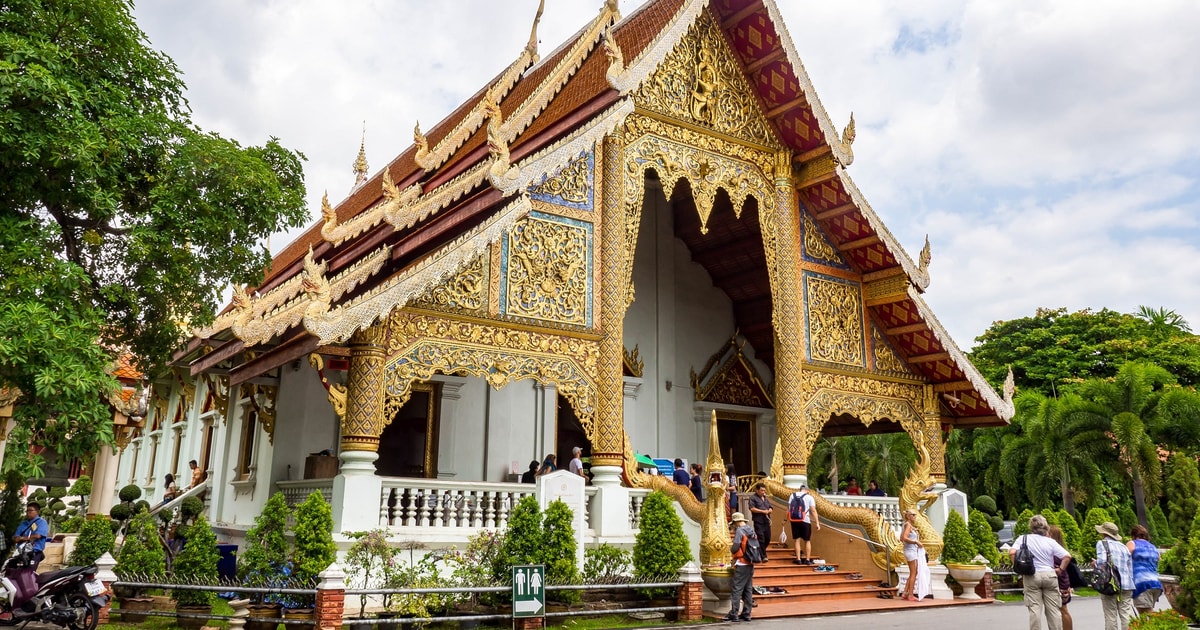
What else to see
- King Tilokarat’s chedi: the largest chedi on the grounds, square with niches on four sides and a tall spire, built in 1487 for the king’s ashes.
- Ruined chedis: smaller brick chedis, one octagonal and multi-tiered, have lost their tops – good spots to sit and imagine the monastery in its prime.
- The bodhi tree: a large bodhi tree grows on the grounds, said to descend from the one Tilokarat planted.
- The Lanna-style vihara and ubosot: a later, three-tiered-roof hall with naga staircases, and a modern ordination hall behind the main building.
- Gongs and bells: large gongs and bells stand beside the main vihara. Visitors may strike some gently – watch what Thai visitors do first.
- Shady grounds: big trees, lawns and benches make it one of the most peaceful temples in the city.
Opening hours, entry fee and dress code
When we checked in November 2026, two independent temple guides gave the same hours: daily, about 6:00 to 18:00. Entry is free; there are donation boxes. It is a working temple, so a hall may be closed during a ceremony or a monks’ assembly – walk the grounds and come back later.
The dress code is the same as at any Thai temple: cover shoulders and knees, take off shoes before entering a hall, don’t point your feet at a Buddha image, and never climb on the ruins. Women should not touch monks or hand things to them directly. Our Chiang Mai temple dress code guide has the full list.
How long to spend
Forty-five minutes is enough to walk around the vihara, see the stucco figures and the king’s chedi. Allow an hour and a half if you want to sit under the trees, photograph the reliefs in good light or read up on the history on site. Most people combine it with the National Museum next door (closed Monday and Tuesday) or with Wat Umong and Wat Suan Dok.
How to get there
Wat Jed Yod is on the north side of the Superhighway (Route 11), the ring road around the city, between the Huay Kaew Road junction near Maya Lifestyle Shopping Center and the Chiang Mai National Museum. From the Old City it is roughly 2–3 km; from Nimman it is close enough to walk.
- Grab or Bolt: the easiest option, about 10–20 minutes from the Old City depending on traffic.
- Red songthaew: flag one down and agree the price before you get in – short city rides usually cost 30–60 baht.
- Bicycle: pleasant early in the morning, but the Superhighway is busy; use the frontage roads.
Step-by-step directions from the Old City, Nimman and Maya are in how to get to Wat Jed Yod.
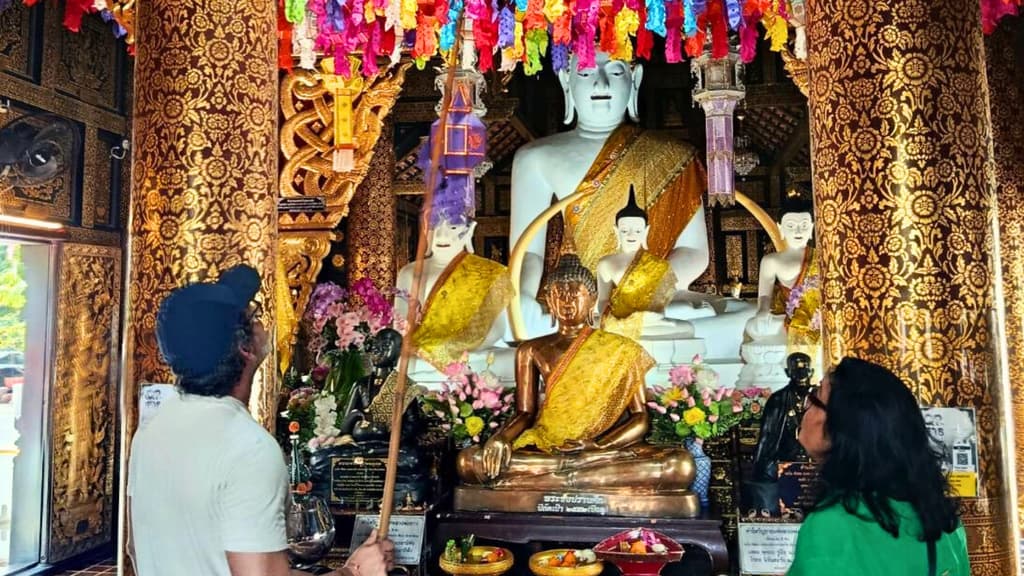
Do you need a tour?
Honestly, no. No GetYourGuide tour includes Wat Jed Yod as a dedicated stop, and the temple is small, free and easy to reach. Go on your own, ideally early or late in the day.
Where tours do help is the rest of your temple time in Chiang Mai. A guided walk like the Historic Temples and City Guided Walking Tour (from about $21, 4.8 stars, 803 reviews) explains the Lanna history you will see at Wat Jed Yod in context at Wat Chedi Luang and Wat Phra Singh. For the mountain temple, the Wat Pha Lat & Wat Phra That Doi Suthep Tour (from about $22) handles the transport up Doi Suthep. And the Chiang Rai White, Blue and Red Temples day trip (from about $29) is the classic big day out. We compare them all in Chiang Mai temple tours.
The most-booked temple tours in Chiang Mai.
Live tours from GetYourGuide
Prices and availability load from GetYourGuide once you allow it.
Old City temples with a guide, 2–3 hours.
Live tours from GetYourGuide
Prices and availability load from GetYourGuide once you allow it.
The mountain temple – sunrise, sunset or by red truck.
Live tours from GetYourGuide
Prices and availability load from GetYourGuide once you allow it.
White, Blue and Red Temples in a 12–13 hour day.
Live tours from GetYourGuide
Prices and availability load from GetYourGuide once you allow it.
Combine Wat Jed Yod with nearby sights
| Sight | Distance from Wat Jed Yod | Why go |
|---|---|---|
| Chiang Mai National Museum | a few hundred metres | Lanna history and art; Wed–Sun 9:00–16:00, 200 baht for foreigners (reported 2026 – check locally) |
| Wat Umong | short Grab ride south-west | Forest temple with brick tunnels from the Lanna era |
| Wat Suan Dok | short Grab ride south | White chedis of the Chiang Mai royal family; Monk Chat |
| Nimman | about 1–2 km south | Cafés and lunch |
| Doi Suthep | about 30–40 min by road | The mountain temple and city views |
A good half-day: Wat Jed Yod at opening time, the National Museum when it opens at 9:00, lunch in Nimman, then Wat Suan Dok and Wat Umong in the afternoon. For a full day, add Doi Suthep at sunset. See the best temples in Chiang Mai for more ideas.
When to visit
The cool season, November to February, is the most comfortable time for temple-hopping. From about February to April the burning season can bring heavy smoke and haze to Chiang Mai; on bad days, keep outdoor time short. The rainy season (roughly June to October) is green and quiet – Wat Jed Yod’s big trees give shade between showers. Details in the best time to visit Chiang Mai.
FAQ
Jed Yod (Chet Yot) means “seven peaks” or “seven spires”, after the seven chedis on the roof of the main vihara. King Tilokarat of Lanna, from 1455. His ashes are kept in the large chedi on the grounds, built in 1487. Yes, entry was free when we checked in November 2026. Donations are welcome. Daily from about 6:00 to 18:00. Some halls may be closed during ceremonies. No. Chiang Rai has its own Wat Jed Yod on Jet Yot Road in the town centre, a different and later temple. This guide is about the 15th-century temple in Chiang Mai. No tour is dedicated to it. Visit on your own by Grab, songthaew or bicycle and use tours for the Old City, Doi Suthep or Chiang Rai.What does Wat Jed Yod mean?
Who built Wat Jed Yod?
Is Wat Jed Yod free?
What are the opening hours of Wat Jed Yod?
Is Wat Jed Yod in Chiang Mai the same as Wat Jed Yod in Chiang Rai?
Is there a tour to Wat Jed Yod?